
Dollar dips on trade optimism
October 28, 2019 | 08:58 PM
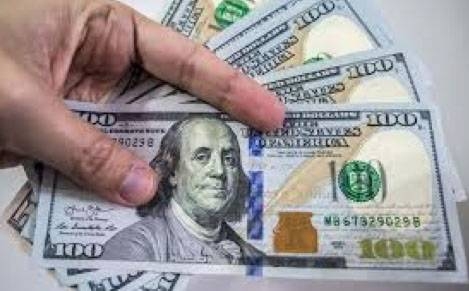
dollar
October 28, 2019 | 08:58 PM
Last Updated: October 28, 2019 | 11:37 PM

3 minute read
AA
Resize


NEW YORK — The US dollar slipped on Monday as optimism that the US and China will reach a trade deal reduced demand for safe haven currencies, and as investors waited on the Federal Reserve’s meeting this week. US President Donald Trump said on Monday he expected to sign a significant part of the trade deal with China ahead of schedule but did not elaborate on the timing. The comments come after the US Trade Representative's office and China's Commerce Ministry said on Friday that US and Chinese officials are "close to finalizing" some parts of a trade agreement, with talks to continue. The trade war between the US and China has been blamed for adding to global economic weakness, which in turn has prompted central banks globally to cut rates. "Positive trade headlines continue to support our view that trade tensions are easing," said Win Thin, global head of FX strategy at Brown Brothers Harriman. The dollar index against a basket of six major currencies fell 0.07% to 97.765. The greenback gained 0.19% against the Swiss franc to 0.9962. The Australian dollar, which is highly sensitive to the Chinese economy, rose 0.07% to $0.6827 US dollars. Hopes that Britain will reach a deal to leave the European Union, and avoid a disorderly exit, also boosted risk sentiment on Monday. The European Union on Monday agreed to a 3-month flexible delay to Britain's departure from the bloc as Prime Minister Boris Johnson pushes for an election after opponents forced him to request an extension he had vowed never to ask for. The next major US focus is this week’s Federal Reserve meeting. The US central bank is expected to cut rates when it concludes its two-day meeting on Wednesday, though investors will be watching for any indication that further cuts are likely. Fed policymakers are deeply divided on whether the US central bank should continue cutting rates. "There's still an awful lot of discrepancy and uncertainty in the markets as to what the Fed will do next year,” said Jane Foley, senior FX strategist at Rabobank. "The market will be looking for clues as to which way that might go."
Meanwhile, the pace of growth in lending to eurozone companies slowed in September, ECB data showed Monday, bolstering outgoing president Mario Draghi's message that more stimulus was warranted to confront an economic slowdown.
Loan growth to non-financial firms shed 0.6 percentage points compared with August, to 3.7 percent year-on-year, the European Central Bank said in figures adjusted for some purely financial transactions.
Credit to households expanded by 3.4 percent, the same pace as the two previous months.
Overall, private sector credit growth slowed from 3.8 to 3.7 percent.
The monthly data is closely watched to gauge the effectiveness of the ECB's measures to encourage lending and investment in the single currency bloc in a bid to drive up economic growth and inflation.
Draghi, after chairing his final meeting as ECB chief last Thursday, said a recent decision to unleash fresh stimulus in the eurozone was "justified" in the face of a weaker economy.
Last month, the Italian economist and his colleagues cut a key interest rate deeper into negative territory and loosened conditions on a new round of cheap credit to lenders.
More controversially, the ECB also relaunched corporate and government bond purchases to the tune of 20 billion euros ($22.2 billion) a month, sparking rare public criticism from some council members who argued that the move was too drastic.
Draghi formally hands over to his successor, former International Monetary Fund chief Christine Lagarde, in a ceremony at the ECB later on Monday.
Observers say her first task will be to heal the rift caused by Draghi's last easy-money package. — AFP


