
Tarahom: Rejection of ex-convicts by family no longer a phenomenon
Tarahom: Rejection of ex-convicts by family no longer a phenomenon
January 15, 2017 | 12:18 AM
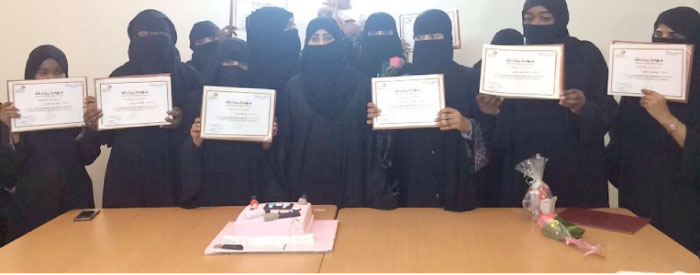
Tarahom, the charitable organization that supports prisoners and their families, celebrated recently celebrated the graduation of 16 women after attending courses in make-up, skin care and hairdo. Radha Al-Ahmadi, head of women's section at Tarahom, said the courses ran five hours a day for eight weeks. — SG photo
January 15, 2017 | 12:18 AM
Last Updated: January 15, 2017 | 12:18 AM

3 minute read
AA
Resize


[caption id="attachment_112542" align="alignleft"] Tarahom, the charitable organization that supports prisoners and their families, celebrated recently celebrated the graduation of 16 women after attending courses in make-up, skin care and hairdo. Radha Al-Ahmadi, head of women's section at Tarahom, said the courses ran five hours a day for eight weeks. — SG photo
[/caption] DAMMAM – The chief executive of Tarahom, the national committee for the welfare of prisoners and their families, the chances of families rejecting children who are released from prison, an issue that used to be widespread particularly in the eastern parts of the Kingdom, have been diminishing, Al-Watan daily reported. Dr. Yousef Al-Rashid revealed that Saudi society has greater awareness now and many of the families receive and embrace their children released from prison with open arms. He said rejection of freed prisoners is no longer a phenomenon in the Kingdom, which used to be a big concern in the past. Al-Rashid disclosed that his committee has a role in connecting the prisoners and their families while stressing that it has developed a mechanism to support them physically and psychologically. He said: "We run aftercare centers, creating a suitable environment for those who come out of prisons, and thank God they were only a few cases, according to what we encountered during our work." He stressed that there are four factors that contribute to parents embracing their children who return home after serving time in prison, namely: level of education, experience and training, psychological stability and social awareness. Al-Rashid stressed that shedding light on the refusal of parents to welcome their children is not appropriate, because these cases are few and abnormal. He said: "I do not support discussing such topics, as they are no longer relevant in Saudi society for such cases to be highlighted." He said such problematic cases are very rare in the eastern regions of the Kingdom these days. “I only call for the job market to absorb ex-prisoners with the support of the ministries of education and labor and social development," Al-Rashid said. He said the role of the committee does not cover convicted terrorists because they do not fall under the scope of its work. He stressed that the prison is a public institution that requires competent people to carry out several tasks. The scope of the committee is to provide moral support and relief to prisoners and their families when they serve time and after release.
 Tarahom, the charitable organization that supports prisoners and their families, celebrated recently celebrated the graduation of 16 women after attending courses in make-up, skin care and hairdo. Radha Al-Ahmadi, head of women's section at Tarahom, said the courses ran five hours a day for eight weeks. — SG photo
[/caption] DAMMAM – The chief executive of Tarahom, the national committee for the welfare of prisoners and their families, the chances of families rejecting children who are released from prison, an issue that used to be widespread particularly in the eastern parts of the Kingdom, have been diminishing, Al-Watan daily reported. Dr. Yousef Al-Rashid revealed that Saudi society has greater awareness now and many of the families receive and embrace their children released from prison with open arms. He said rejection of freed prisoners is no longer a phenomenon in the Kingdom, which used to be a big concern in the past. Al-Rashid disclosed that his committee has a role in connecting the prisoners and their families while stressing that it has developed a mechanism to support them physically and psychologically. He said: "We run aftercare centers, creating a suitable environment for those who come out of prisons, and thank God they were only a few cases, according to what we encountered during our work." He stressed that there are four factors that contribute to parents embracing their children who return home after serving time in prison, namely: level of education, experience and training, psychological stability and social awareness. Al-Rashid stressed that shedding light on the refusal of parents to welcome their children is not appropriate, because these cases are few and abnormal. He said: "I do not support discussing such topics, as they are no longer relevant in Saudi society for such cases to be highlighted." He said such problematic cases are very rare in the eastern regions of the Kingdom these days. “I only call for the job market to absorb ex-prisoners with the support of the ministries of education and labor and social development," Al-Rashid said. He said the role of the committee does not cover convicted terrorists because they do not fall under the scope of its work. He stressed that the prison is a public institution that requires competent people to carry out several tasks. The scope of the committee is to provide moral support and relief to prisoners and their families when they serve time and after release.


