
Syria regime, opposition set for first face-to-face at Astana
Syria regime, opposition set for first face-to-face at Astana
January 22, 2017 | 12:00 AM
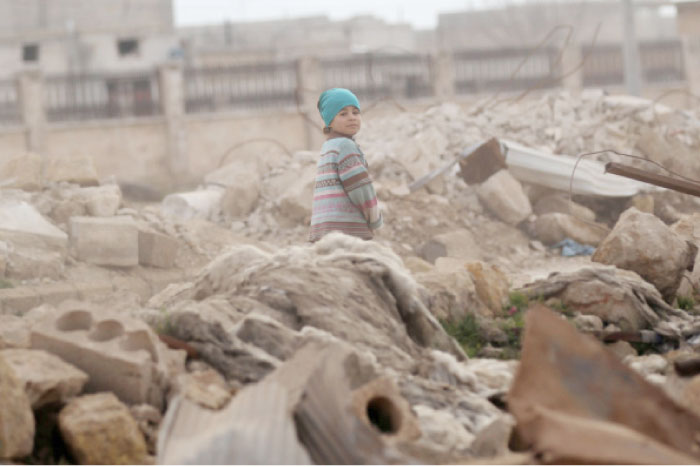
A child walks through rubble of damaged buildings in Al-Rai town, northern Aleppo countryside. — Reuters
January 22, 2017 | 12:00 AM
Last Updated: January 22, 2017 | 12:00 AM

3 minute read
AA
Resize


Astana, Kazakhstan — The Syrian regime and the opposition will on Monday sit down at the negotiating table for the first time in nearly six years of war, the latest diplomatic push to end hostilities.
Hosted in the Kazakh capital Astana, the talks will see an opposition delegation composed exclusively of rebel groups negotiating with the regime of Bashar Al-Assad in an initiative sponsored by Turkey and Russia.
Though the talks have been welcomed by all parties in the conflict, delegates from both sides are headed to Kazakhstan with apparently opposing ideas about the goals.
The opposition delegation insists they will focus solely on reinforcing a frail nationwide truce brokered by Moscow and Ankara last month.
Moscow said this week that the objective was to "consolidate" the ceasefire and to involve rebel field commanders in the "political process" to end the bloodshed, creating a basis for a new round of UN-hosted negotiations in Geneva next month.
The United Nations' peace envoy for Syria, Staffan de Mistura, will also attend.
Mohammad Alloush of the Jaish Al-Islam will lead a "military delegation" of around eight people.
They will be backed by nine legal and political advisers from the opposition High Negotiations Committee (HNC) umbrella group.
But key rebel group Ahrar Al-Sham said it would snub the Astana talks over ceasefire violations and ongoing Russian air strikes on the country.
Ahrar Al-Sham nonetheless said it would support decisions taken by other rebel groups represented at the talks if they were "in the interest of the nation".
With stakes high and outcomes unclear, the Syrian opposition is wary that the regime could use the rebel groups' inexperience in political talks to its advantage in Astana, a European diplomatic source told AFP.
"There is genuine worry in the opposition that the representatives of rebel groups, which are not at all used to these types of international negotiations, will be dragged into a political solution that will play into the hand of the regime," the source said.
A negotiator in previous ceasefire agreements, Washington was last month sidelined from sponsoring the nationwide truce brokered by Russia and Turkey after months of disengagement from the conflict.
US President Donald Trump's team has been invited to Astana but has not yet officially responded.
Washington's absence has seen Moscow and Ankara join efforts on the Syrian crisis despite lingering disagreements over Assad's future and other aspects of the conflict.
After overcoming a rift in relations following Turkey's downing of a Russian warplane in Syria in November 2015, the two countries this week conducted their first joint strikes against Daesh group targets in an operation Moscow hailed as "highly effective".
France and Britain will be represented at the ambassador level, the European diplomatic source said.
A representative of EU foreign affairs chief Federica Mogherini said Friday that "we will be there" without giving details about the delegation.
Divergent agendas and the absence of some key players and high-level officials cast uncertainty on how the Astana talks could serve as a building block for next month's Geneva negotiations.
"The success or failure of Astana is not predetermined," Russian Middle East expert Boris Dolgov told AFP.
"If something can be achieved in Astana, I think that a portion of the armed opposition will participate in the Geneva talks."


