
Ushering in the season of change
Ushering in the season of change
January 26, 2017 | 12:00 AM
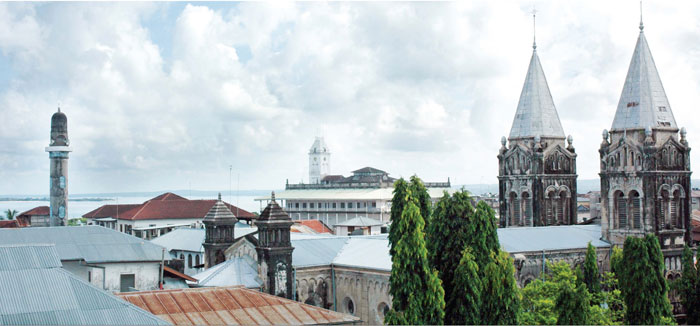
Stone town of Zanzibar, Tanzania
January 26, 2017 | 12:00 AM
Last Updated: January 26, 2017 | 12:00 AM

3 minute read
AA
Resize


[gallery size="medium" td_select_gallery_slide="slide" td_gallery_title_input="Ushering in the season of change" ids="115423,115424,115422"]
Project Mausam was launched by India in partnership with member states in the 30th Session of World Heritage Committee meeting held at Doha, Qatar in June 2014. The project aims to enable a significant step in recording and celebrating this important phase of world history from the African, Arab and Asian-world perspectives.
“The primary focus area of Project Mausam is transnational world heritage nomination of cultural trade routes and maritime cultural landscapes across the Indian Ocean. This transnational nomination will be based on specific themes emerging from centuries of cultural exchange among the Indian Ocean countries such as indentured labor, sites linked to exchanges of Buddhism, Hinduism, Islam and Christianity, Fortified
Port Settlements, Navigational Landmarks, sites linked to Cowrie trade, Spice trade etc.,” explains Ravindra Singh, Secretary, Ministry of Culture,
Government of India.
Mausam’ or Arabic ‘Mawsim’ refers to the season when ships
could sail safely. The distinctive wind system of the Indian Ocean region follows a regular pattern which facilitated the movement of people, goods and ideas across the Indian Ocean, enabling cultural interactions and exchange until when steam-powered cargo carriers reduced reliance on sailing ships. The knowledge and manipulation of the monsoon impacted ancient and historical trade, local economies, religion, politics
and cultural identities.
The commodities exchanged through these networks included a wide array of objects — aromatics, medicines, dyes, spices, grain, wood, textiles, gems, metals and plant and animal products — and were transported through voyages and sold at markets or bazaars along the Indian Ocean littoral. Present-day national identities and perceptions of the past are deeply interwoven with age-old ties.
Project goals
The project aims to explore the multi-faceted Indian Ocean ‘world’ – collating archaeological and historical research to document the diversity of cultural, commercial and religious interactions in the Indian Ocean. It will promote research on themes related to study of maritime routes through international scientific seminars and meetings and by adopting a multidisciplinary approach. It will encourage the production of specialized works along with publications for general public, to promote a broader understanding of the concept of a common heritage and multiple identities.
Reviving lost linkages with nations: Countries along the Indian Ocean have shared links with each other for millennia. Project Mausam seeks to transcend present-day national and ethnic boundaries documenting and celebrating the common cultural values and economic ties of the Indian Ocean ‘world’. This will strengthen ties between countries across the Indian Ocean and set a precedent for new bridges of cooperation and
continued interactions.
Creating links to existing World Heritage sites: Proving a platform
to connect discrete Cultural and Natural World Heritage sites across the Indian Ocean ‘world’ by providing a cross-cultural, transnational narrative.
Redefining ‘Cultural Landscapes’: Identifying gaps in listing of sites and filling in lacuna by providing a holistic, multi-layered perspective and drawing relationships between existing categories of ‘Natural’ and ‘Cultural’ heritage. This would redefine the concept of ‘Cultural Landscapes’, allowing a fresh, multi-faceted approach to relationships.
Achieving transnational nomination under World Heritage: Advocating
for ‘Indian Ocean Maritime Routes’ to attain transnational nomination under world heritage tag, increasing scope for visibility, research, sustainable tourism, heritage development and promoting other cultural conventions across the Indian Ocean region.
Initiatives within India: Kerala in south India is making efforts to revive the two-millennia-old Spice Route. Besides re-establishing Kerala’s maritime trade relations with 31 countries associated with the Spice Route, the project seeks to prompt modern travellers to undertake voyages and excursions. In the process, there would be revival of cultural, historical and archaeological exchanges. Project Mausam also aims to include a significant research component. The Project is also in perfect tandem with UNESCO’s changing perspectives on protecting heritage and fostering creativity.
There are many plans in near future. “India will host an international conference with 39 member states of the Indian Ocean Region in September-October this year to arrive at a collective strategy for transnational nominations under Project Mausam. The tentative list for Maritime Trade Routes/ Cultural Landscapes as per collective strategy and site selection is proposed be finalised by April 2016 for submission to UNESCO World Heritage Centre,” shares Singh.


