
Sharif seeks help from religious scholars in war against militants
Sharif seeks help from religious scholars in war against militants
March 12, 2017 | 12:00 AM
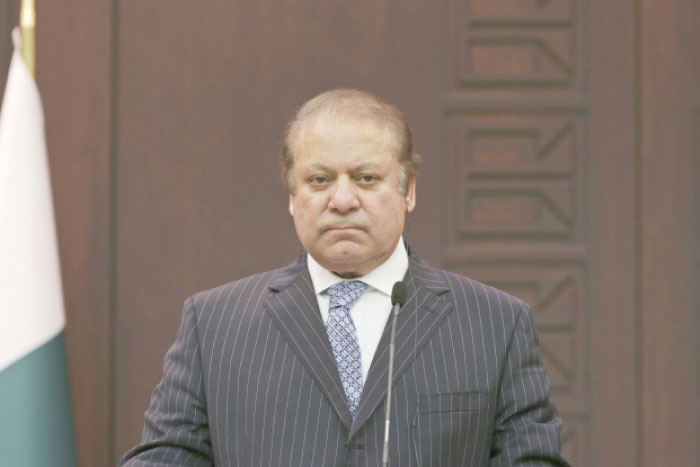
Pakistani Prime Minister Nawaz Sharif listens to a reporter during a press conference in Ankara, Turkey, in this Feb. 23, 2017 file photo. — AP
March 12, 2017 | 12:00 AM
Last Updated: March 12, 2017 | 12:00 AM

3 minute read
AA
Resize


ISLAMABAD — Pakistan’s prime minister is seeking help from the country’s clerics to fight extremism.
Nawaz Sharif, in a speech at a seminary on Saturday, called on religious scholars to help him dismantle a “narrative” characterized by militants killing thousands of people over the last decade in hopes of overthrowing the government and enforcing Taliban-style laws in Pakistan.
Sharif says Pakistan is close to success in the battle against terrorism and asked clerics to join him in rejecting militancy.
Sharif’s appeal comes a day after a bill was introduced in Pakistan’s parliament
to be debated bill next week that would legalize trials before military courts for another two years, a measure human rights activists say negates the basic principles of justice and denies those on trial the chance for a fair defense.
The bill, designed to combat terrorism, was presented before the lower house of parliament on Friday by Law Minister Zahid Hamid.
Prime Minister Nawaz Sharif’s government was expected to fast-track the draft before lawmakers amid indications the National Assembly — the lower house of parliament — would unanimously back the constitutional amendment.
All parties except for slain Prime Minister Benazir Bhutto’s Pakistan People’s Party agreed on the government proposed draft.
A member of the PPP, the main opposition party, said her party had suggestions that should be incorporated in the draft. Azra Fazal said the bill was not acceptable unless debated and improved. The session was adjourned until Monday when the debate would take place.
The proposed amendment authorizes the military to try any suspect on terrorism-related charges.
Barrister Zafarullah Khan, adviser to the prime minister on law and human rights, said there was a consensus between all the political parties that under extraordinary circumstances “we have to set military courts.” But, he said, there are some small differences on certain points.
A similar amendment was adopted in 2015, allowing military courts to carry out trials of suspected militants under a two-year mandate, which expired in January.
That measure came after a December 2014 Taliban attack at a school in the northwestern city of Peshawar, which killed 154 people, mostly schoolchildren. The assault also prompted Pakistan to lift its moratorium on the death penalty. Since then, more than 400 convicts have been executed, though most were not linked to terrorism-related cases.
Along with military trials, Pakistani forces have carried out several military operations against militants in lawless tribal regions bordering Afghanistan, including a major push that began in mid-2014 in North Waziristan, a militant base. — AP


