
UNHCR lauds Saudi support for refugees, displaced people
November 27, 2018 | 05:34 PM
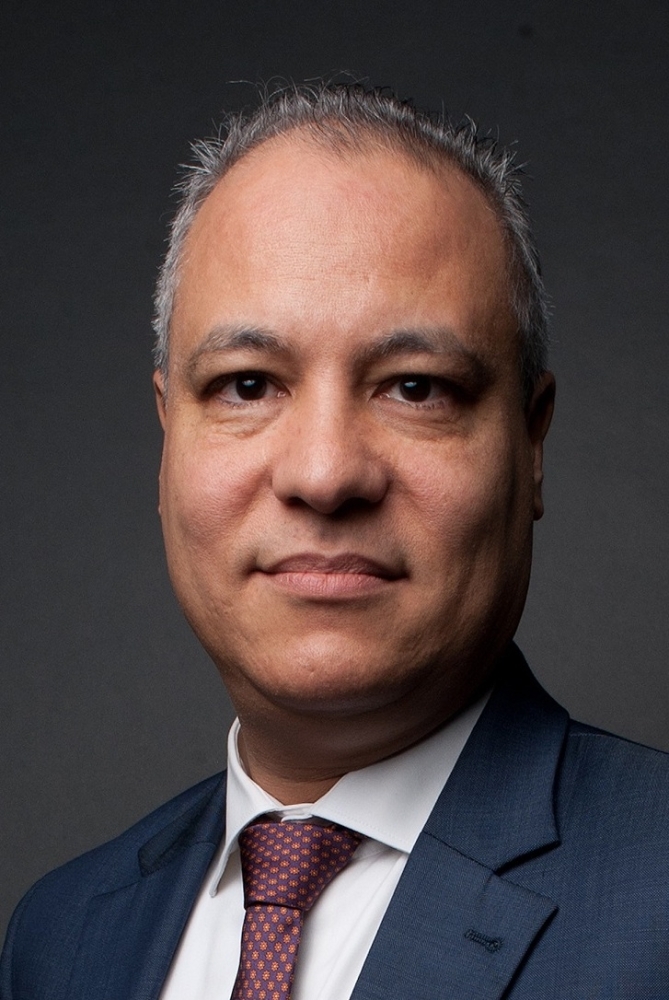
Khaled Khalifa

3 minute read
AA
Resize


Saudi Gazette report
RIYADH — Saudi Arabia is one of UNHCR’s largest donors in the Middle East and North Africa. Over the past decade, the Kingdom has contributed more than one billion riyals to humanitarian causes. In 2018, Saudi contributions exceeded SR216 million.
Since the introduction of UNHCR’s Zakat program, 744 generous Saudis have dedicated more than $635,000 in Zakat money, helping 3,746 refugee families.
“The Kingdom’s support to refugees and displaced persons is a shining example of Islamic values and humanitarian action,” said Khaled Khalifa, regional representative of the United Nations High Commissioner for Refugees to the States of the Gulf Cooperation Council.
UNHCR launched its global Zakat platform before the holy month of Ramadan this year, in co-operation with the Abu Dhabi-based Tabah Foundation as a trusted, efficient and Shariah-compliant route for Muslims to fulfill their Zakat obligations. Backed by fatwas from leading Islamic scholars and institutions across the Middle East and North Africa, the Zakat Program is subject to rigorous monitoring, ensuring transparency at every step, from donation to provision of assistance.
“With the recently introduced Winter Zakat initiative, our purpose is to bring a positive change to the lives of refugees by providing them with the necessary cash to purchase winter supplies to cope with the harsh weather in Jordan and Lebanon. To ease the process for contributions, the UNHCR adopted a digital only approach to pay Zakat with a click of a button at zakat.unhcr.org, ensuring security, efficiency, transparency and complete peace of mind for contributors,” Khalifa said.
Quarterly reports are published on the Zakat platform to demonstrate how the funds are being distributed to eligible refugee families on s monthly basis, he added.
The UNHCR introduced a smart Zakat calculator that is built in accordance with global AAOIFI (Accounting & Auditing Organization for Islamic Financial Institutions) standards. The calculator’s algorithm allows donors to understand Nisab for gold, silver, money and stocks per solar or lunar year. It then produces a final Zakat amount and data on how many refugees are assisted through the contribution.
“Our digital platform is revolutionizing the way Zakat is distributed to refugees who are in dire need of support. In Jordan, for example, refugee families receive Zakat funds every month through designated ATMs that are integrated with biometrics technology including iris scanning that simplifies the collection process leaving no room for fraud, and no need for bank cards or pin codes,” explained Khalifa.
Funds are constantly required to meet urgent survival needs of refugees and internally displaced persons (IDPs) especially in this part of the world.
The UNHCR reports show that in Jordan, the bulk of cash assistance is spent on rent, food, utility bills and debt repayment, while in Lebanon, families prioritize food, healthcare, and debt repayment as well. In Jordan, $2,160 provides 12 families with enough cash to cover rent, food, utilities and debt repayment for a month, while in Lebanon, $2,100 provides 12 families with enough cash to cover food, rent, healthcare, and debt repayment for a month.
“More than $10 million is needed to help some 60,000 of the most vulnerable families in Jordan and Lebanon survive December of this year alone,” explained Khalifa.
The Kingdom welcomed more than 33,000 Iraqis to the country during the second Gulf War in 1991, and it is currently hosting thousands of Yemenis and Syrians, facilitating them access to education and healthcare since the outbreak of crises in their countries. Also, in 2014, Saudi Arabia issued a Royal Decree granting residency exception to the Rohingya, enabling them to regularize their stay in the country with access to education, work, and healthcare services. This benefited more than 190,000 members of the Rohingya community.
The UNHCR has a proven 68-year track record in assisting refugees in need throughout the world, regardless of the background of their plight. Through the Zakat Program, the agency provides much-needed cash assistance to extremely vulnerable Syrian refugee families, living far below poverty line and struggling to make ends meet. There are almost 1 million refugees in Jordan and Lebanon who require urgent support to survive the upcoming harsh winter season.
“Maintaining the trust of our donors is very important as they help us reshape lives through their valuable contributions. We ensure transparency by sharing quarterly reports on our Zakat website, explaining in detail the collection and distribution of Zakat funds,” Khalifa said.


