
Saudi Arabia, UK sign agreement to accelerate access to innovative medical treatments
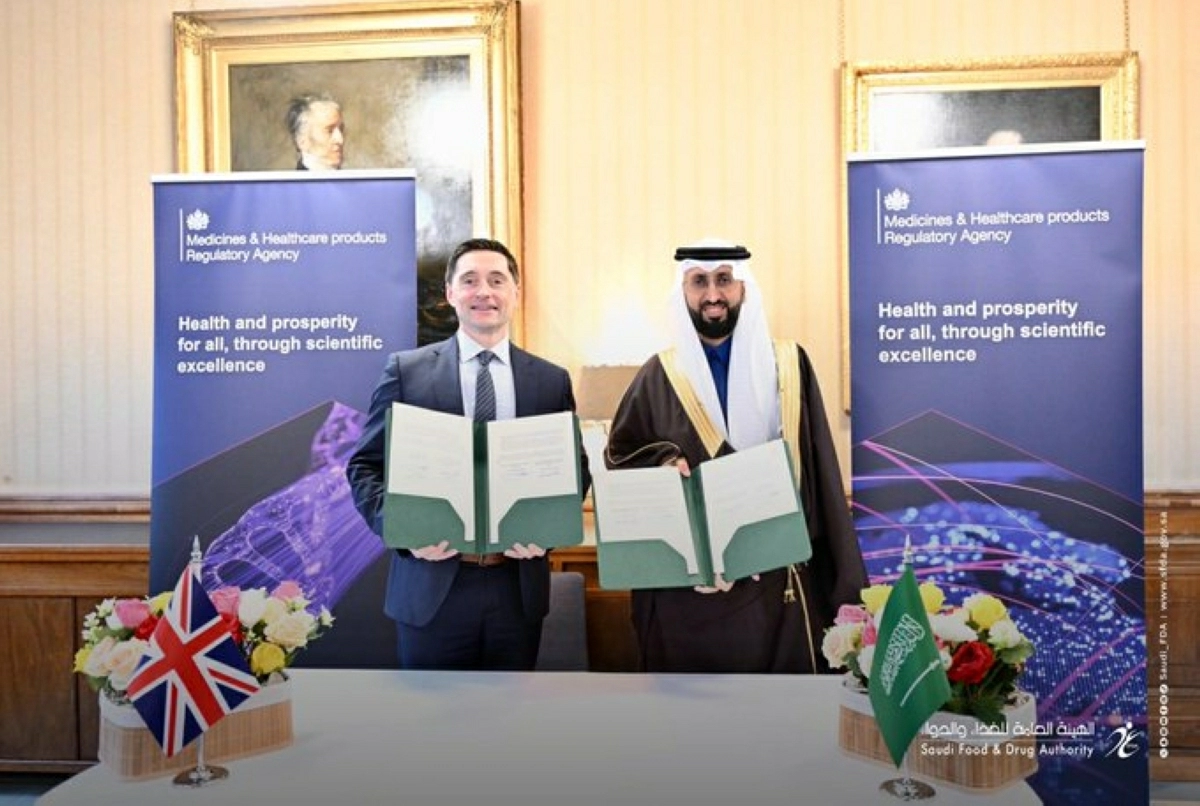


LONDON — The Saudi Food and Drug Authority (SFDA) signed a memorandum of understanding (MoU) with the UK's Medicines and Healthcare products Regulatory Agency (MHRA) to advance the evaluation of innovative treatments and facilitate timely patient access to them.
The agreement was signed by SFDA Chief Executive Officer Dr. Hisham bin Saad Al-Jadhey and MHRA Chief Executive Lawrence Tallon on the sidelines of the Drug Information Association and Medicines and Healthcare products Regulatory Agency (DIA-MHRA) Global Summit, held in London on November 16–17, with the aim of accelerating access to innovative treatments while maintaining safety, quality and efficacy standards.
MHRA Chair Professor Anthony Harnden was also present at the signing.
The two sides also held discussions on cooperation priorities in light of recent scientific and regulatory developments.

Building on existing cooperation and a shared commitment to advancing medical innovation, the MoU covers the evaluation of treatments for rare diseases, advanced therapies and biotechnology products.
It also includes exchanging expertise on the use of artificial intelligence, computer modeling and simulation in clinical studies and trials, as well as the registration and evaluation of medical products, good manufacturing practices, quality systems, product testing and analysis, and supply chain monitoring.
The cooperation is expected to help clarify regulatory requirements for developers at an early stage, particularly those developing treatments for patients with limited therapeutic options.
These efforts aim to strengthen medical product safety in both countries' markets and enhance the ability of both authorities to identify and monitor associated risks.


