
India pledges $1.6bn package to bolster ties with Nepal
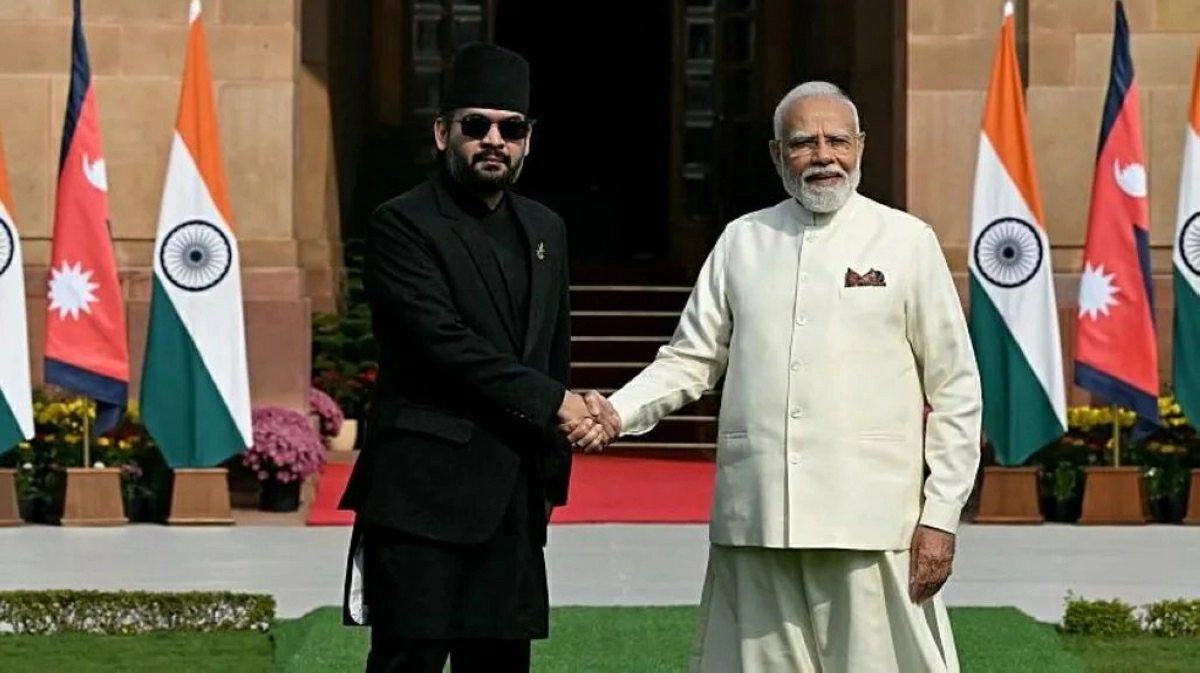


NEW DELHI — India said on Monday it will provide flood-hit Nepal with a $1.62 billion economic package, one of its largest-ever assistance commitments, as both sides sought to reset a relationship strained by years of friction.
The announcement followed talks between Indian Prime Minister Narendra Modi and his Nepali counterpart Balendra Shah, who is in New Delhi for a two-day visit — his first bilateral trip abroad since coming to power in March.
Shah has repeatedly called for his country to be treated as an equal by its powerful neighbors. His first visit to the Indian capital put that approach to the test.
Shah, 36, rose to power after a wave of Gen Z-led protests toppled his predecessor.
Modi, meanwhile, is serving a third term and has recently faced student-led protests in India.
The contrast between the two leaders was striking. Shah, wearing his trademark black suit and sunglasses, stood beside Modi, 76, dressed in white.
Yet, the two leaders seemed determined to project warmer relations. They exchanged gifts, inspected a military guard of honour and jointly flagged off a new cross-border train service.
For Nepal, the stakes were about far more than repairing diplomatic ties.
The two countries announced a series of agreements covering trade, hydropower, transport and education for Nepali youths.
The visit comes nearly three months after a devastating Himalayan flood swept through Nepal, killing some 1,500 people, leaving 5,200 missing and presumed dead, and destroying roads, bridges, schools, homes and livelihoods.
The economic package aims to give fresh impetus to Nepal’s reconstruction and long-term development, Modi said, addressing the media after the talks, with Shah standing beside him.
"Our commitment will be to help affected families get their lives back on track, create new opportunities and further strengthen Nepal’s capacity to deal with future disasters,” Modi said.
The package will include a $377 million grant for post-disaster reconstruction and new infrastructure projects, and a $1.24 billion line of credit for energy projects, the countries said in a joint statement.
"Specific projects as well as modalities for the provision of development assistance will be finalised through mutual consultations," they said.
The August flood devastated Nepal's hydropower sector, damaging more than a dozen projects, wiping out about 10% of the country's electricity generation capacity and forcing it to halt power exports and turn to India to meet domestic demand.
Nepal and India enjoy longstanding cultural, economic and people-to-people ties with an open border allowing hundreds of thousands of Nepalis to live and work in India.
Apart from being Nepal's biggest trade partner, New Delhi is also a major bilateral aid donor and was the first to respond after the flood, sending several planeloads of aid and help to restore communication links that were severed in the mountains.
The country faces a huge reconstruction challenge. The government estimates rebuilding could cost as much as $4.8bn. Addressing the UN General Assembly in September, Shah warned that when climate disasters devastate poorer countries, "the answer cannot simply be another mega-loan".
Modi pledged nearly $1.6bn in Indian support. Most of it will come as a line of credit for energy projects, alongside about $400m in grants for reconstruction and infrastructure.
While Nepal would have preferred a larger package, former senior Nepali diplomat Vijay Kant Karna says it is still "a significant amount" and could help stabilize a relationship that has often been uneasy.
A Hindu-majority nation wedged between India and China, Nepal has long had to navigate competing interests from its two giant neighbours. Allegations of political interference and an unresolved border dispute have frequently complicated ties with India.
According to Govind Pokharel, a former vice-chairman of Nepal's National Planning Commission, Shah's government may have chosen to set contentious issues aside in order to secure progress on more immediate development needs.
"Right now you can go home and convince the young Nepalis that it will be handled later," Pokhrel says, "but if they don't deal with these issues in the future, there will be criticism."
Veteran Indian diplomat Anil Trigunayat says both sides appear to have opted to leave the dispute to established mechanisms rather than engage in what he calls "cartographic aggressions".


