
Iran says it will use ‘all available means’ to counter US blockade


DUBAI — Iran has said it will use all means at its disposal to confront the US naval blockade imposed during the nine-month US-Israel war on the country.
"We will definitely not tolerate it (the blockade) and we will use all our tools to confront this US aggression," Iran's Foreign Ministry spokesperson Esmaeil Baghaei said in a weekly news conference on Monday.
"The naval blockade ... is considered a military aggression," he added. "Iran has the right to use any available tool to defend itself in this regard."
The US blockade was imposed on April 13, lifted in June after Washington reached a draft understanding with Tehran, then restored on July 14 after the agreement collapsed.
“You should bear in mind that what the Americans have described as economic sanctions, an economic blockade and a naval blockade undoubtedly constitute an act of military aggression against Iran,” Baghaei said.
“Under these circumstances, Iran is entitled, pursuant to Article 51 of the UN Charter, to use any means at its disposal to defend itself.”
The war broke out on February 28 when the US and Israel carried out air strikes that killed Iranian Supreme Leader Ali Khamenei and other senior officials.
The conflict has since expanded after Iran launched missile and drone attacks across the region, and armed groups it backs in Lebanon, Yemen and Iraq also entered the fray.
The Strait of Hormuz has become the focus of the conflict, with Iran continuing efforts to block the waterway, which is vital for oil and natural gas shipments.
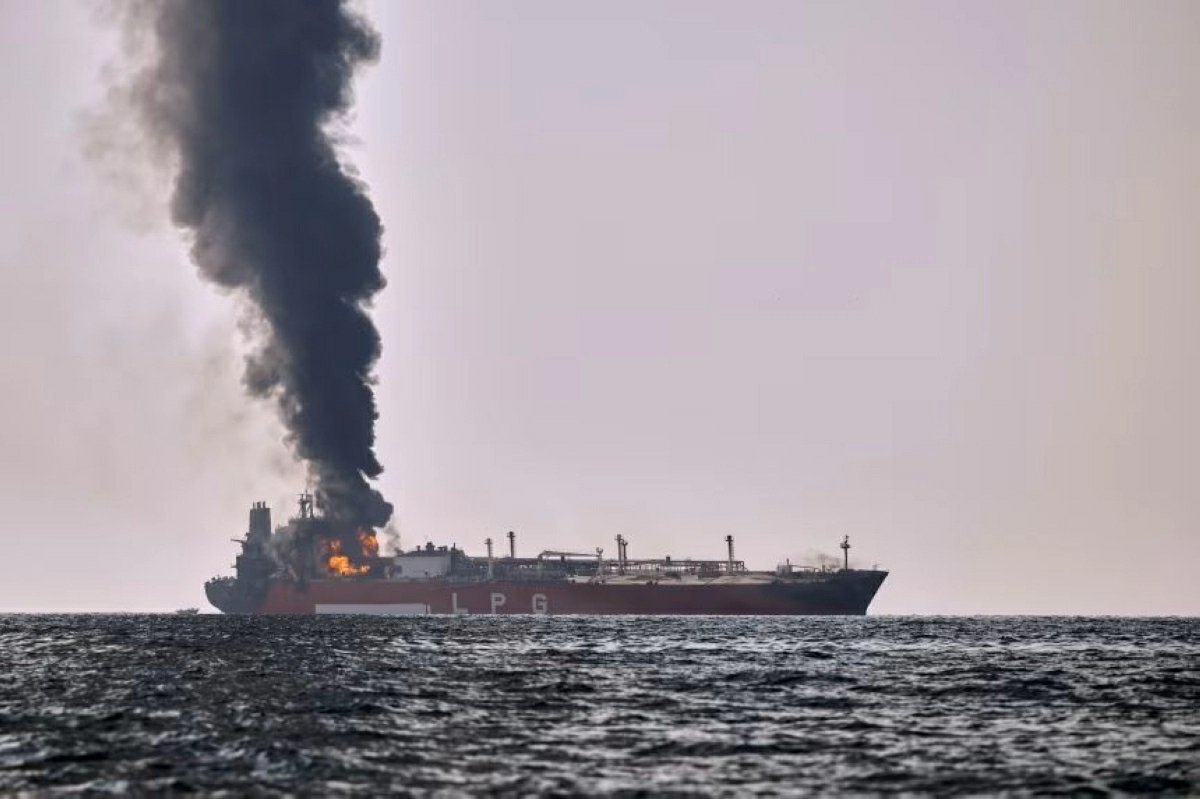
Iranian forces have made multiple announcements in recent weeks that ships have caught fire while trying to use routes that Tehran considers off-limits.
TankerTrackers.com said last week that a tanker was loading Iranian crude oil in the Gulf via ship-to-ship transfer and could become the first vessel to successfully export the country’s crude since the US reimposed the blockade in July.
Baghaei said on Monday that reports about Iranian ships loading oil are “speculation”.
Visible Iranian crude exports decreased to near zero in recent months due to the blockade.
Iran says it controls passage through the strategic Strait of Hormuz and will only reopen it when Washington meets its conditions, including halting hostilities, lifting the blockade and waiving sanctions.
"If the other side (the US) fulfils the related conditions we will be able to execute our commitments in the shortest time possible", Baghaei said, referring to the reopening of the Strait.
Diplomatic efforts to resolve the war remain stalled, especially since the collapse of a June agreement that laid out a path to a permanent settlement.
Iran has said Hormuz could open within two days if Washington meets its conditions, including halting hostilities, lifting the blockade and waiving sanctions.
“If the American side fulfils its commitments, security can be restored to the Strait of Hormuz and the region in the shortest possible time,” Baghaei said.
Meanwhile, Israel's prime minister-designate Gadi Eisenkot has said he does not see any “immediate threat” from Iran.
“The Iranian threat is the most serious threat to the state of Israel, but at this moment I do not see a direct and immediate threat to the state of Israel that would require action before a government is formed,” Eisenkot said at a news conference.
But Israel’s caretaker prime minister, Benjamin Netanyahu, has warned of the danger of downplaying “serious and grave threats” facing Israel, shortly after Eisenkot said there was no need for immediate military action against Iran.
“Anyone who belittles or downplays these immediate, serious and grave threats surrounding us does so for political reasons,” Netanyahu said at a news conference in Israel’s parliament.


