
Al-Jadaan: Non-oil revenues cover 37% of government spending
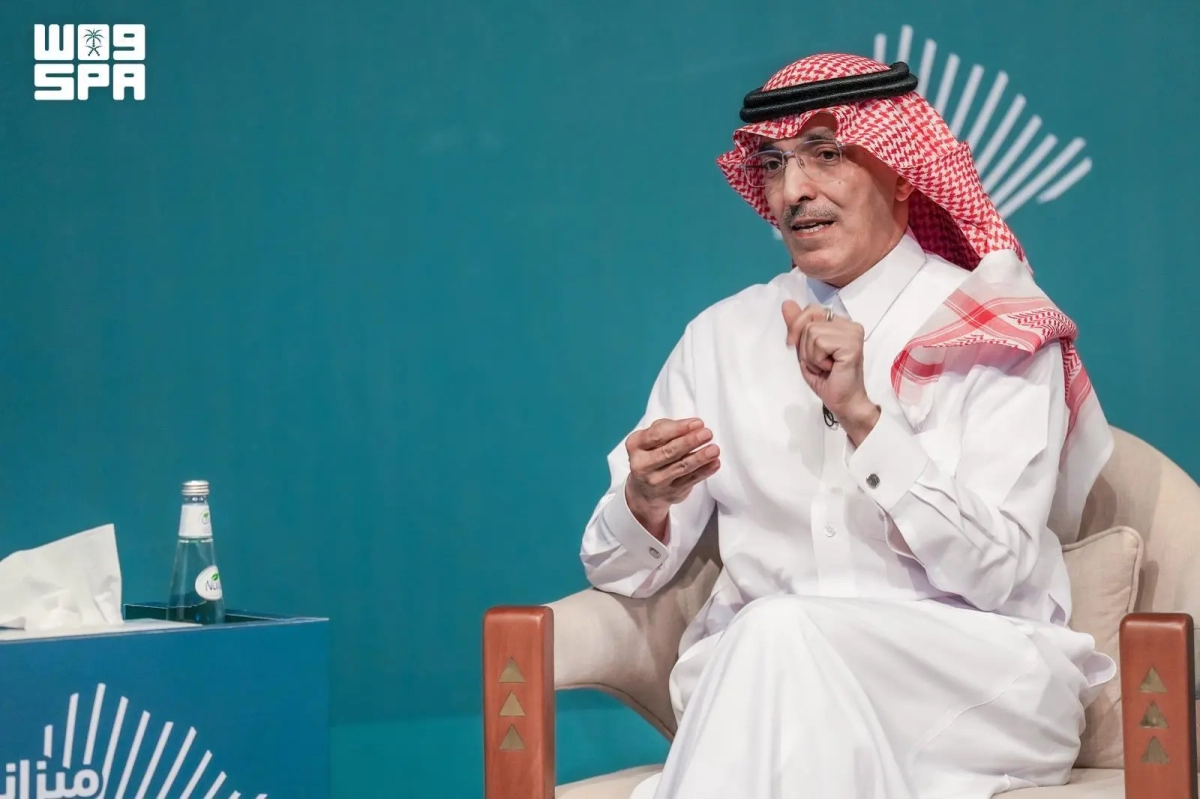


RIYADH — Minister of Finance Mohammed Al-Jadaan stressed that Saudi Arabia’s public finances enjoy a high degree of flexibility and resilience in dealing with economic and geopolitical changes and challenges.
He stated that non-oil revenues currently cover around 37 percent of total government spending, compared with 16 percent in previous years. “This helps limit the impact of fluctuations in oil revenues on government spending, enhance its stability, and strengthen the government's ability to plan over the medium term,” he said.

Al-Jadaan made the remarks while speaking at a panel discussion at the Budget 2027 Forum, organized by the Ministry of Finance. The minister said that the Kingdom's institutional capabilities had developed significantly over the past 10 years since the launch of Saudi Vision 2030. This progress has enhanced the government's ability to manage crises and change efficiently, make decisions quickly, analyze various scenarios, and benefit from previous infrastructure investments, strengthening its resilience in the face of shocks.
Al-Jadaan noted that the Saudi economy had faced numerous challenges over past decades and had emerged from them stronger. The national economy continues to record growth in non-oil GDP, consumption and private-sector investment despite global and regional challenges, supported by the government's ability to manage crises, address their effects and support the private sector.
Al-Jadaan stressed that citizens remain at the top of the government's priorities, alongside providing essential care for residents. He said that caring for people, providing services, improving quality of life, and creating business and employment opportunities are key government priorities, adding that there is no conflict between providing essential services and managing crises.
He noted that since the beginning of the crisis on February 28, 2026, the government, in cooperation with the private sector, had established alternative logistics channels by redirecting shipping routes from ports in Eastern Region to Red Sea ports and making use of the Kingdom's railway and road networks and northern border crossings. These measures helped strengthen supply chain resilience and ensure the continued availability of essential goods and services.
The minister also addressed budget deficit management, noting that the government accepts deficits when the economic and social returns generated by spending exceed its financing costs, thereby contributing to broadening the economic base.
He highlighted that there is currently no need to use reserves, noting that reserves had increased by around 20 percent since 2022 despite the budget recording a deficit.
Al-Jadaan also stressed that there are no upper limits on the financial support required to meet the needs of the military and security sectors in defending the nation and protecting citizens and residents.
He praised the efforts of government entities, including the military and security sectors, to improve spending efficiency and ensure returns exceed costs. The minister also highlighted government efforts to achieve savings, reschedule some projects, and restructure a number of projects and programs to prioritize spending that directly affects citizens, ensure the continued provision of essential services, improve quality of life, and enhance the military and security sectors' ability to counter threats.


