
Thousands protest in Kurdish region as Baghdad seizes control of oil and border crossings
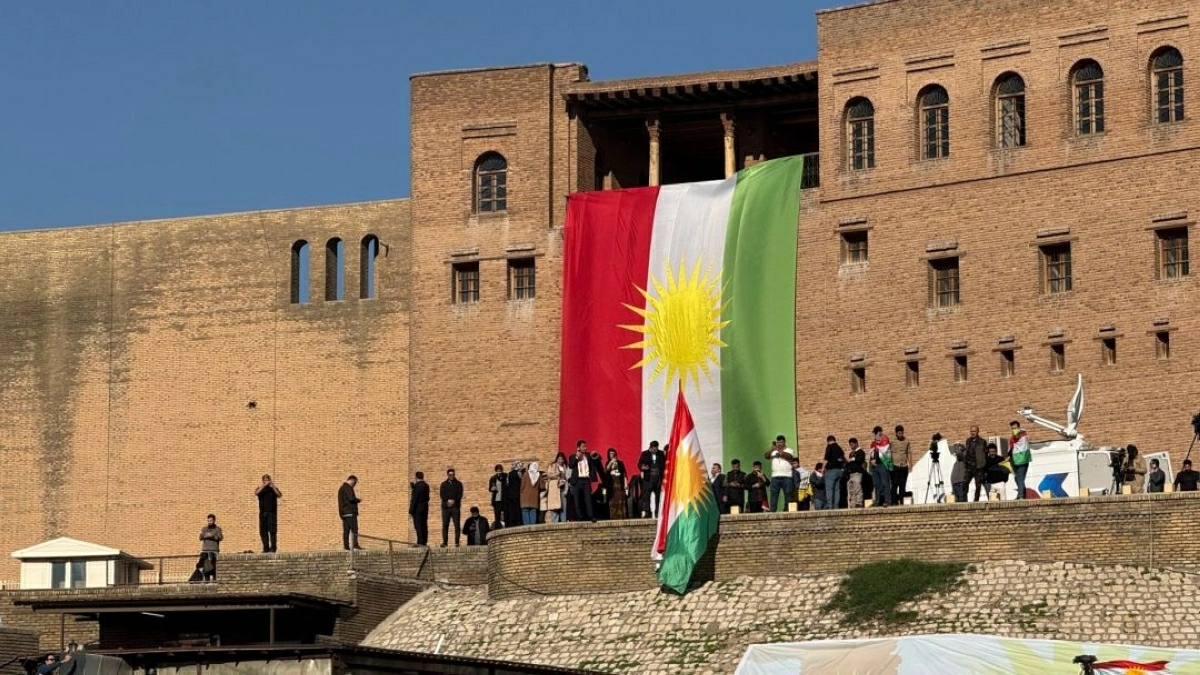


IRBIL — Demonstrators took to the streets of Irbil on Thursday in large numbers, waving flags of the semiautonomous region in northern Iraq, protesting a move by the federal government to take control of oil operations and border crossings previously run by Kurdish authorities.
Iraqi Prime Minister Ali al-Zaidi said the measures announced on Tuesday were part of a bid to stop oil smuggling.
According to state media reports later on Thursday, Iraqi border forces closed two border crossings with Syria and Iran that had been administered by the Kurdish authorities.
The decision marked a new escalation in a long-running power struggle between the central government and Kurdish authorities and spurred rival Kurdish parties to come together in opposition to Baghdad.
Al-Zaidi — who took office earlier this year with the backing of US President Donald Trump — has been trying to assert authority on several fronts, including sending security forces into an area long controlled by a powerful Iran-backed militia last week.
Tuesday’s decision brings official and unofficial border crossings in the Kurdish region under federal government management. It places approval for oil exports from the region under the authority of the federal oil ministry and transfers the management of oil fields in Diyala, Kirkuk, Salahuddin and Nineveh provinces to it.
Al-Zaidi also dismissed Kirkuk’s operations commander and police chief and the head of the Border Ports Commission. He said the measures reflect Iraq’s “independent national will.”
Iraq’s Federal Supreme Court on Wednesday backed Baghdad’s move and ruled that federal authorities may deploy troops to secure all of Iraq’s international borders, “including the borders located within the territories administered by the Kurdistan Region.”
Defense Ministry spokesman Maj. Gen. Yahya Rasool said Wednesday evening that Al-Zaidi, who is also commander in chief, had ordered the deployment of military units to Kirkuk and other provinces and had ordered dirt roads used for oil smuggling to be blocked.
Iraq’s Kurds have governed themselves since 1991, and the 2005 constitution recognized the Kurdish region and its government. But since 2003, Irbil and Baghdad have struggled for control over land, oil and money.
The Kurdish regional government’s cabinet said on Wednesday that Al-Zaidi’s order “violates both the Constitution and the constitutional rights of the Kurdistan Region” and represents “an attempt to return Iraq to a centralized regime.” It accused Baghdad of using “military rhetoric and threats” to carry out a “premeditated, long-standing plan directed against the constitutional structure of the Kurdistan Region.”
The Federal Supreme Court said the Kurdish regional government’s authority covers only the land it administered on March 19, 2003, the day before the US-led invasion that unseated Saddam Hussein. Kurdish peshmerga forces moved into many disputed areas after 2003, including the oil fields covered by this week’s orders.
The Iraqi constitution’s Article 140 was meant to settle the fate of the disputed territories, a band of land from the Syrian to the Iranian border that is home to Kurds, Arabs, Yazidis, Assyrians, Turkmen and other communities.
The article called for reversing Saddam-era policies that expelled Kurds from the area and moved Arabs in. It also called for a census and a referendum by the end of 2007 on whether the areas would join the Kurdistan Region. Neither was held.
Peshmerga forces took control of oil-rich Kirkuk in 2014, when the Iraqi army collapsed in the face of an offensive by Daesh militants. Iraqi forces pushed them out in October 2017, weeks after the Kurdish region held an independence referendum that Baghdad called unconstitutional.
The disputes between Baghdad and Irbil have largely centered around oil exports and revenues. The country relies on oil revenues for about 90 percent of its budget.
The Kurdish region’s own politics are also in turmoil.
On Nov. 5, the Patriotic Union of Kurdistan quit the government led by the Kurdistan Democratic Party, calling it “failed” and threatening to form a parallel administration.
No new cabinet has been formed since October 2024 regional elections, and the legality of the current government is being challenged at the Federal Supreme Court.


